
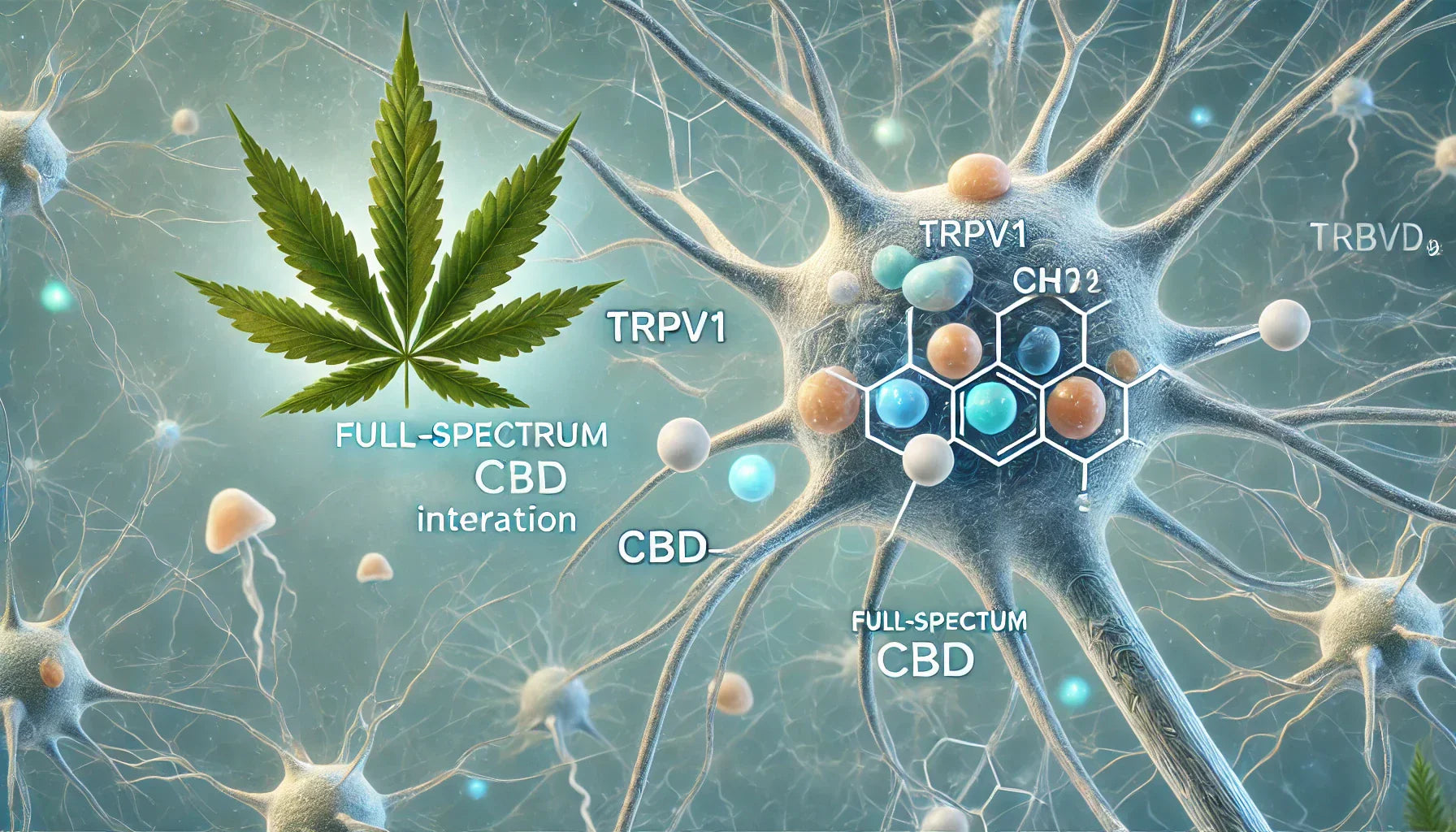
The Transient Receptor Potential Vanilloid 1 (TRPV1) receptor plays a crucial role in pain perception, inflammation regulation, and overall homeostasis within the human body. This receptor, commonly referred to as the capsaicin receptor, is activated by various stimuli, including heat, acidity, and bioactive compounds such as cannabidiol (CBD).
Full-spectrum CBD, which retains a broad range of cannabinoids, terpenes, and flavonoids, is believed to enhance TRPV1 modulation, producing powerful analgesic, anti-inflammatory, and neuroprotective effects. This article delves into the intricate connection between TRPV1 and full-spectrum CBD, highlighting emerging research and potential applications for health and wellness.
What is TRPV1?
The TRPV1 receptor is a non-selective cation channel that plays a crucial role in sensory perception. First identified in 1997 (Caterina et al., 1997), TRPV1 is widely expressed in sensory neurons, the skin, the gastrointestinal tract, and the central nervous system. This receptor is activated by:
- Capsaicin, the spicy compound in chilli peppers
- High temperatures exceeding 43°C
- Acidic conditions, such as those present in inflammation
- Anandamide, an endogenous cannabinoid
TRPV1 and Pain Perception
TRPV1 activation leads to an influx of calcium and sodium ions, initiating pain signals and contributing to inflammation. Chronic pain conditions, such as neuropathy, arthritis, and fibromyalgia, are often associated with dysregulated TRPV1 activity (Julius & Basbaum, 2001). Blocking or desensitising TRPV1 receptors has become a major focus in pain research.
TRPV1 and Neuroinflammation
Beyond pain, TRPV1 plays a critical role in regulating neuroinflammation and neuronal excitability. Overactive TRPV1 receptors have been implicated in neurodegenerative diseases, including Alzheimer’s and Parkinson’s (Gibson et al., 2019). Reducing TRPV1 hyperactivity through natural modulators like CBD could provide a promising avenue for neuroprotection and cognitive enhancement.
How Full-Spectrum CBD Influences TRPV1
CBD is a phytocannabinoid that interacts with various receptors, including TRPV1. Unlike tetrahydrocannabinol (THC), CBD does not induce psychoactive effects but exerts significant therapeutic activity by modulating pain, inflammation, and neural health.
1. CBD as a TRPV1 Agonist and Desensitiser
CBD directly binds to TRPV1 receptors, initiating transient activation followed by desensitisation (Iannotti et al., 2014). This effect reduces excessive pain signalling, which is why CBD is being explored as an alternative to opioid analgesics.
2. CBD’s Role in Inflammation Suppression
Through TRPV1 modulation, CBD can reduce the production of pro-inflammatory cytokines such as TNF-alpha and IL-6 (De Petrocellis et al., 2011). This effect makes full-spectrum CBD a potential treatment for conditions such as rheumatoid arthritis, multiple sclerosis, and inflammatory bowel disease.
3. CBD and Stress Resilience
CBD also interacts with cortisol pathways and serotonin receptors, regulating stress responses and mood disorders. By reducing stress-induced TRPV1 activation, full-spectrum CBD may aid in managing anxiety, PTSD, and depression (Campos et al., 2012).
The Entourage Effect: Why Full-Spectrum CBD is Superior
Full-spectrum CBD contains multiple cannabinoids, terpenes, and flavonoids that synergistically enhance its therapeutic impact—a phenomenon known as the entourage effect (Russo, 2011). Specific compounds that interact with TRPV1 include:
- Beta-Caryophyllene (BCP): A terpene with potent anti-inflammatory and analgesic effects via CB2 receptor activation (Gertsch et al., 2008).
- Limonene & Myrcene: Terpenes that enhance CBD absorption and provide additional anti-inflammatory and anxiolytic effects.
- Cannabigerol (CBG): Another non-psychoactive cannabinoid that amplifies TRPV1 desensitisation and pain relief.
Full-Spectrum vs Isolate: What’s the Difference?
While CBD isolates only contain pure cannabidiol, full-spectrum extracts retain the plant’s natural phytochemicals, enhancing efficacy through multi-target receptor interaction (Nahler et al., 2019).
Therapeutic Applications of Full-Spectrum CBD and TRPV1 Modulation
Due to its TRPV1-modulating properties, full-spectrum CBD shows promise in treating a variety of chronic conditions:
1. Chronic Pain Management
- Neuropathic pain (e.g., diabetes, sciatica, chemotherapy-induced neuropathy)
- Arthritis and musculoskeletal pain
- Migraine and tension headaches (Xiong et al., 2012)
2. Inflammatory Conditions
- Crohn’s disease and irritable bowel syndrome (IBS)
- Autoimmune disorders (e.g., lupus, rheumatoid arthritis)
- Skin conditions such as psoriasis and eczema
3. Neuroprotection and Brain Health
- Alzheimer’s and Parkinson’s disease prevention
- Reduction of oxidative stress and neuroinflammation
- Potential use in epilepsy and seizure disorders
Conclusion
The interaction between TRPV1 and full-spectrum CBD presents a groundbreaking therapeutic approach for managing pain, inflammation, and neurological health. By modulating TRPV1, CBD can reduce chronic pain, suppress inflammation, enhance neuroprotection, and improve overall well-being.
As research continues to uncover new therapeutic applications, full-spectrum CBD stands as a natural, effective alternative for those seeking relief from chronic conditions. Future clinical trials will solidify its place in modern medicine, but existing evidence already supports its widespread benefits.
References
- Bento, A. F., et al. (2011). "Beta-caryophyllene modulates inflammation through CB2 receptor activation." British Journal of Pharmacology. https://doi.org/10.1111/j.1476-5381.2011.01386.x
- Campos, A. C., et al. (2012). "Cannabidiol, neuroprotection and neuropsychiatric disorders." Pharmacological Research. https://doi.org/10.1016/j.phrs.2012.06.004
- Caterina, M. J., et al. (1997). "The capsaicin receptor: A heat-activated ion channel in the pain pathway." Nature. https://doi.org/10.1038/389816a0
- De Petrocellis, L., et al. (2011). "Cannabinoids and TRP channels." British Journal of Pharmacology. https://doi.org/10.1111/j.1476-5381.2011.01345.x
- Gibson, H. E., et al. (2019). "TRPV1 as a therapeutic target for neurodegenerative diseases." Neuroscience Letters. https://doi.org/10.1016/j.neulet.2019.134340
- Russo, E. B. (2011). "Taming THC: Cannabis synergy and phytocannabinoid-terpenoid entourage effects." British Journal of Pharmacology. https://doi.org/10.1111/j.1476-5381.2011.01238.x
- Xiong, W., et al. (2012). "Cannabinoids suppress inflammatory and neuropathic pain via glycine receptors." Journal of Experimental Medicine. https://doi.org/10.1084/jem.20120242

Join the conversation
Comments
Have a question or something to share? We'd love to hear from you.